Mathematics
Discover how RVians build confidence and a love for Maths through hands-on, joyful learning experiences designed to develop strong problem-solving skills.
Department Vision
To nurture RVians’ love of Mathematics, translating their efforts into competencies and confidence, and equipping them with strong critical problem solving skills.
Department Mission
To create a vibrant, joyful and positive learning environment for students to cultivate their love for the subject and to become skilful problem solvers.
Teaching and Learning
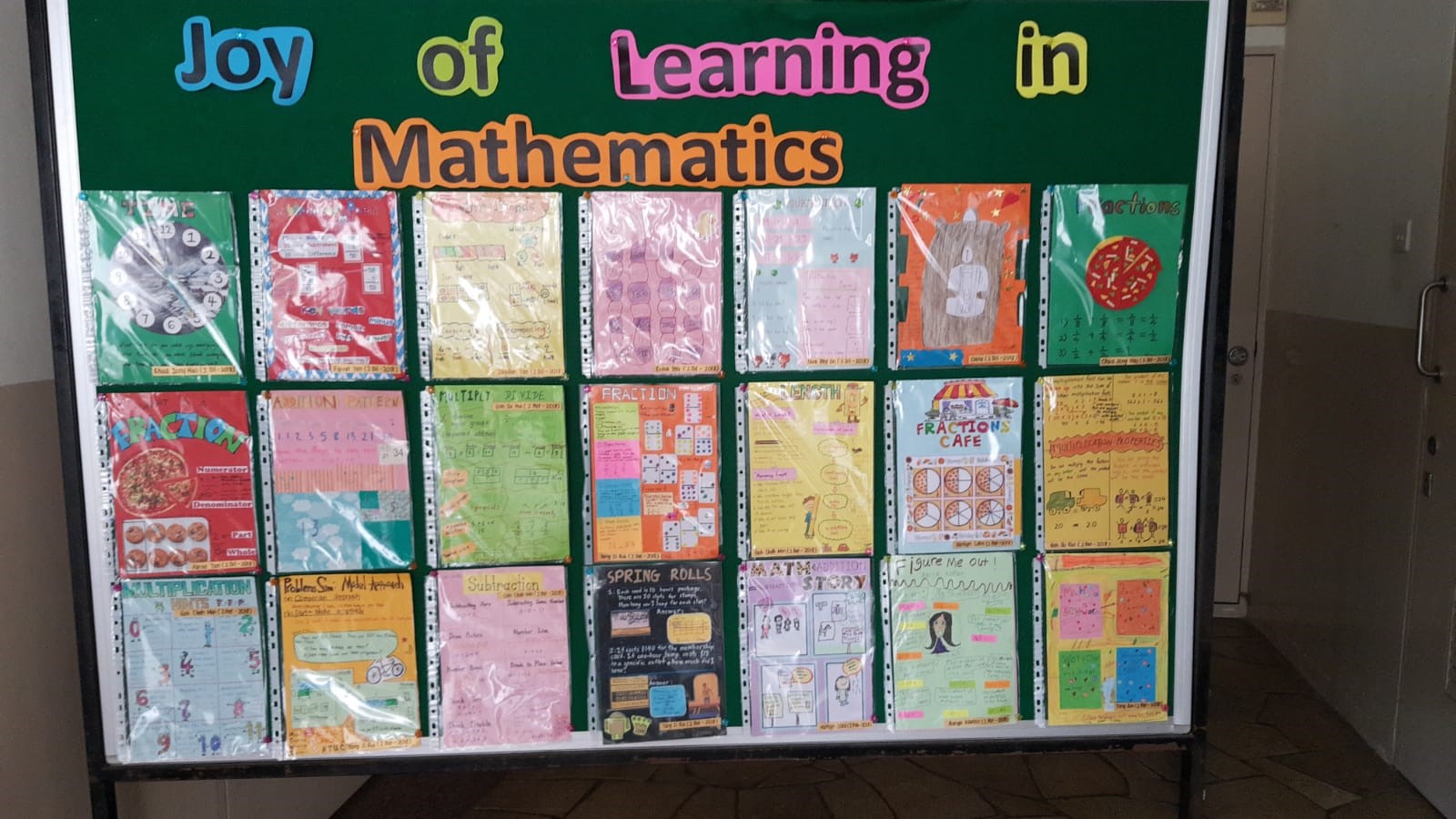
Fostering Joy of Learning in Math is an important focus in the learning of Mathematics. Over and above the importance of learning of skills and concepts, it is equally important for students to find joy in the learning of Math. To engender this outcome, the Math department aspires in designing learning experiences that ignite excitement, encourage students to be inquisitive and to discover answers on their own.
(i) Integrated Learning Math Programme (Primary 3 Math)
The programme provides a platform to promote joy and passion for learning as the P3 students are given the autonomy to showcase their projects in different mediums. It enhances their leadership skills as students take lead and ownership to design their project. It promotes deep thinking as students do their own research to find the relevance and connection for their projects and make the learning of Mathematics more relatable and applicable to their everyday lives. The students explore how fractions can be used in different occupations and various aspects in their daily lives.
(ii) Modular Mathematics Programme (Primary 2)
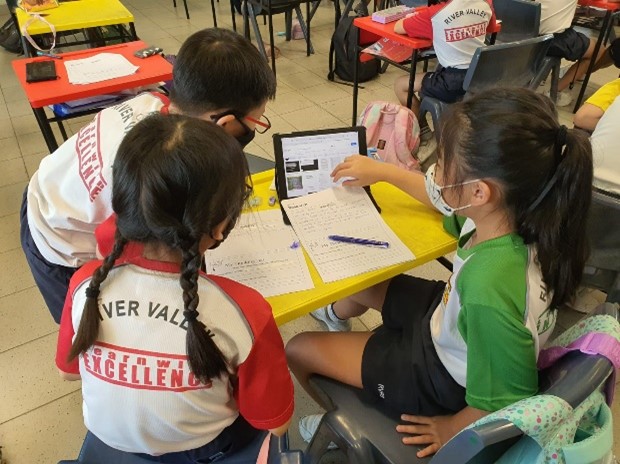
The P2 Math Modular Programme seeks to bring joy of learning into the mathematics classrooms of our precious Primary 2 students. Believing strongly that “Math is Fun and Math is Everywhere”, the Math department designs lesson packages that enrich students’ learning of Math.
From the exploration of mathematical manipulatives to bringing Math out of the classroom to making application of Math in real-life situations, students will be given opportunities to enjoy, learn and use Math in interactive ways. During the three-period lesson, students are given different tasks and activities that stretch their thinking and creativity, enable them to work collaboratively as a team, allow them to make mathematical communication and connection, experience how positive attitudes and values can be displayed through problem solving and finding excitement in the learning of Math. At the end of the programme, we hope to evoke the passion of Math among our young RVians.
(iii) ICT-based Lessons
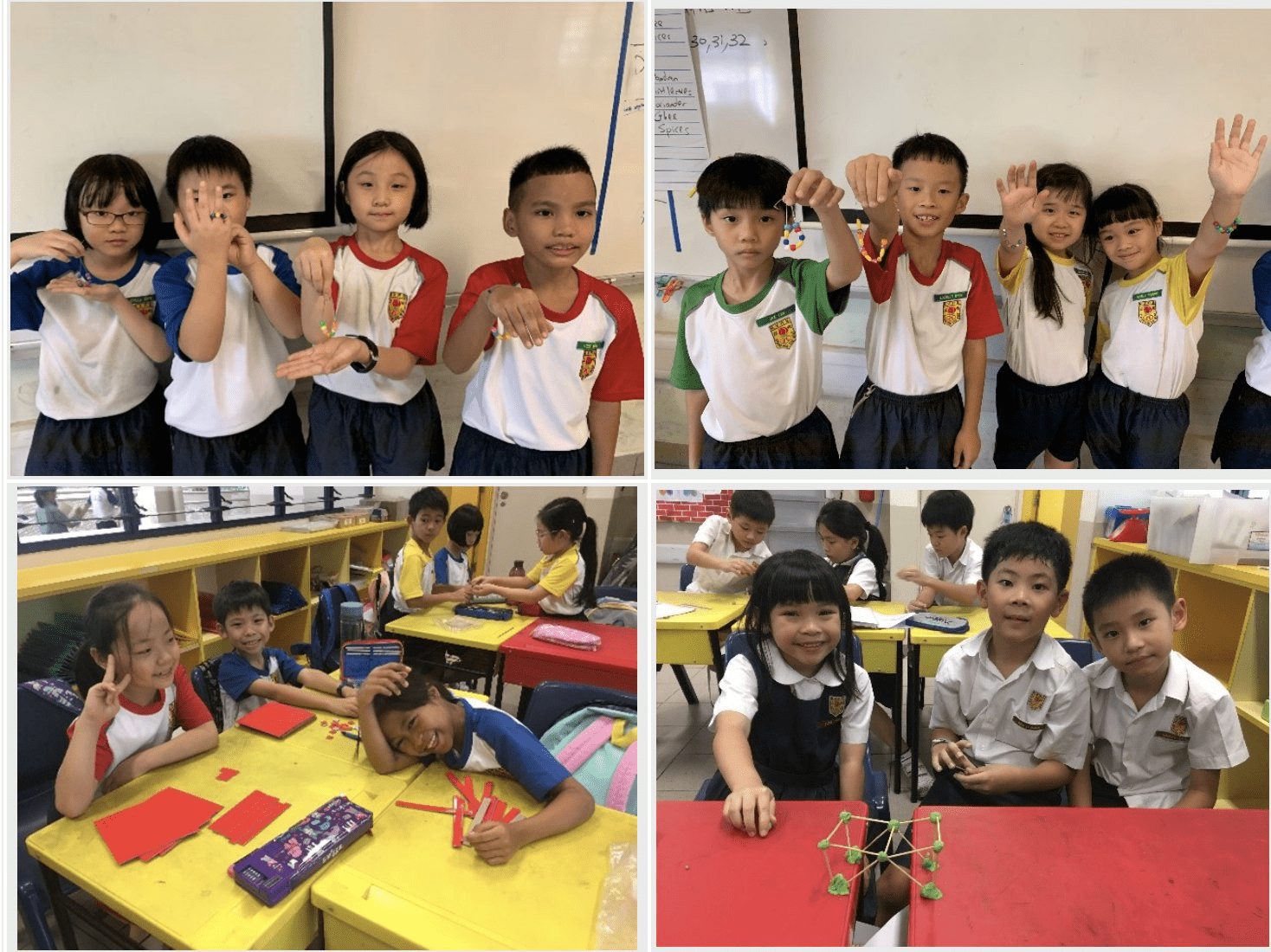
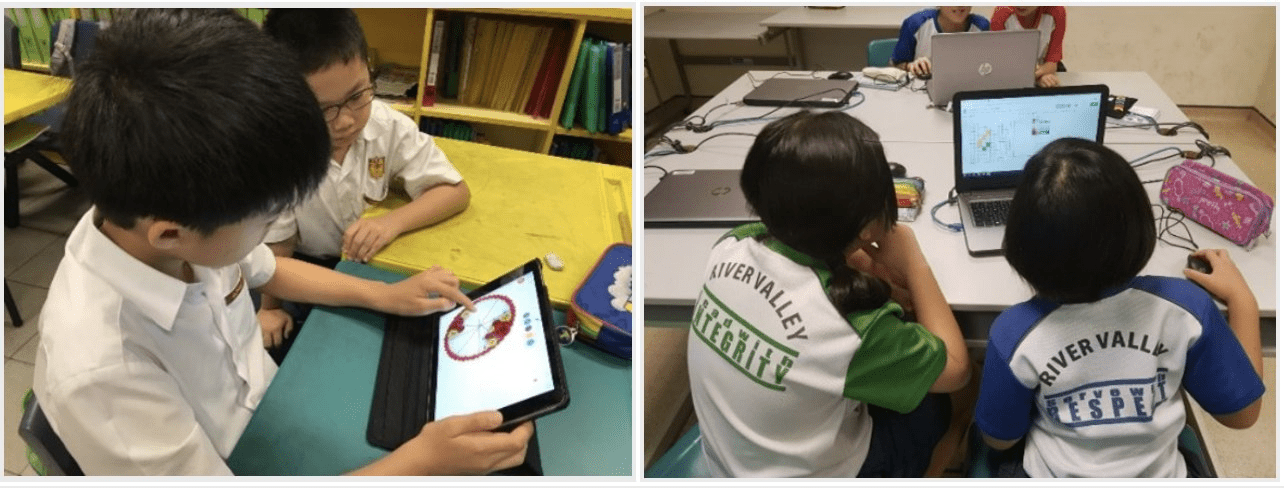
To promote self-directed and collaborative learning in Math with the help of ICT affordances, students are exposed to the use of Excel Spreadsheet, Google Sites, Games, Padlet and Kahoot! The ICT affordances help them to understand mathematical concepts through visualizations, simulations and representations. Assignment of resources in the MC Online portal also allows teachers to support students in learning with online resources. Through harnessing ICT affordances, students are given opportunities to explore, experiment and design.
iv) Activity-based lessons
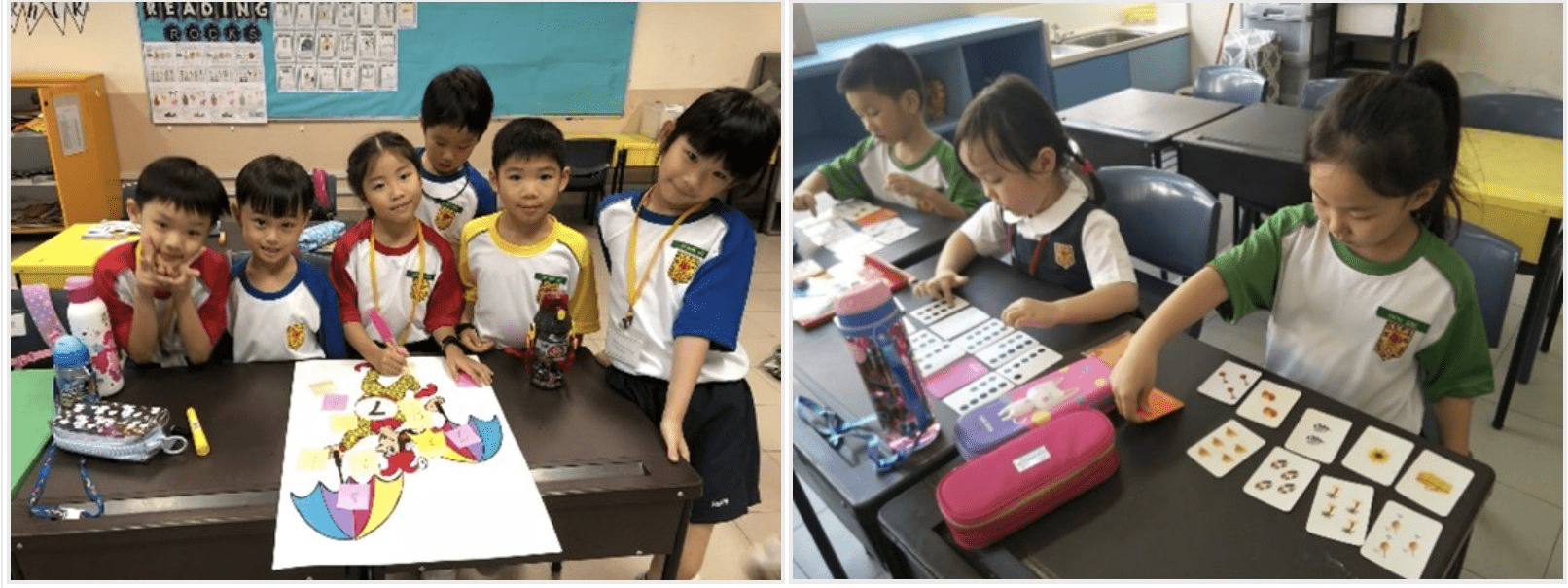
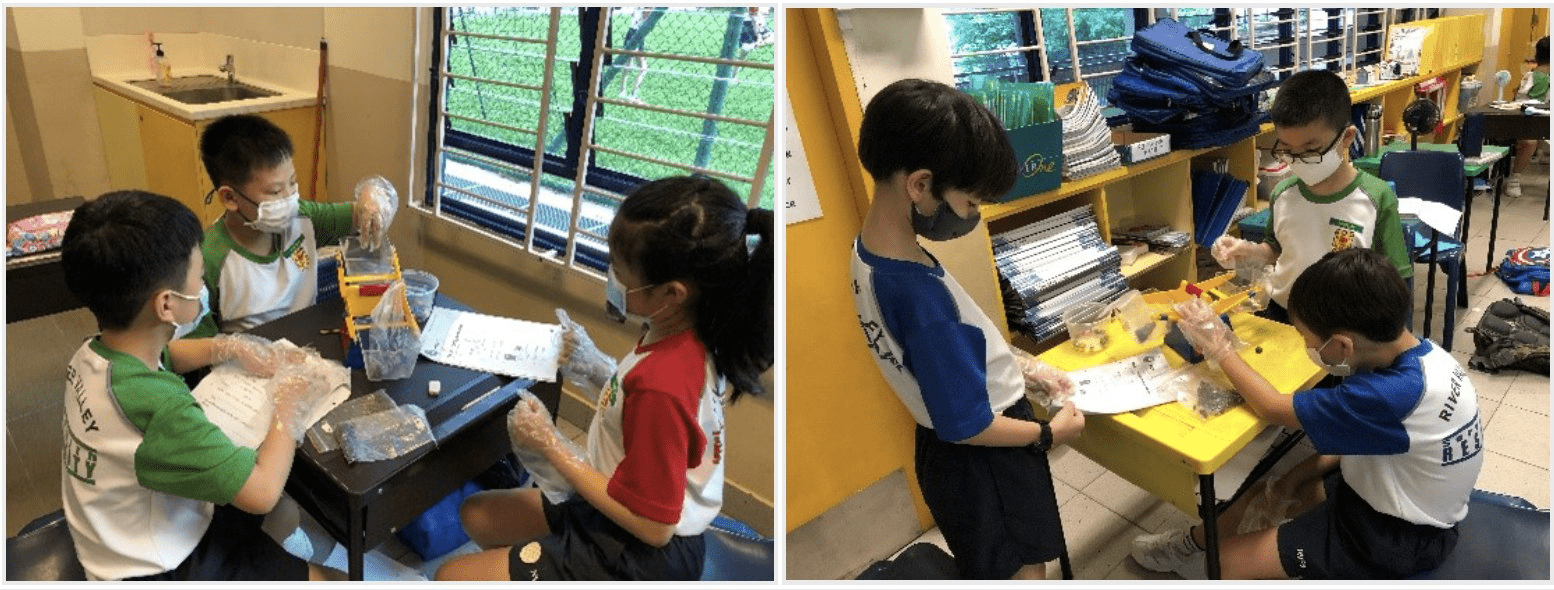
Math teachers adopt this approach in which students learn by doing and applying. Teachers provide activities to engage students so that they can explore and learn mathematical concepts and skills, individually or collaboratively in groups. Teachers plan for students to use teaching aids like manipulatives or other resources. From concrete manipulatives and experiences, students are guided to uncover abstract mathematical concepts or results. During the activities, students apply what they have learnt and share their learning with one another collaboratively.
These lessons are also designed to create different types of learning experiences and cater to the diverse learning needs and styles of our students. It promotes a higher level of active participation and deeper mathematical discourse in our lessons.
(v) Marvell-ious Math Programme
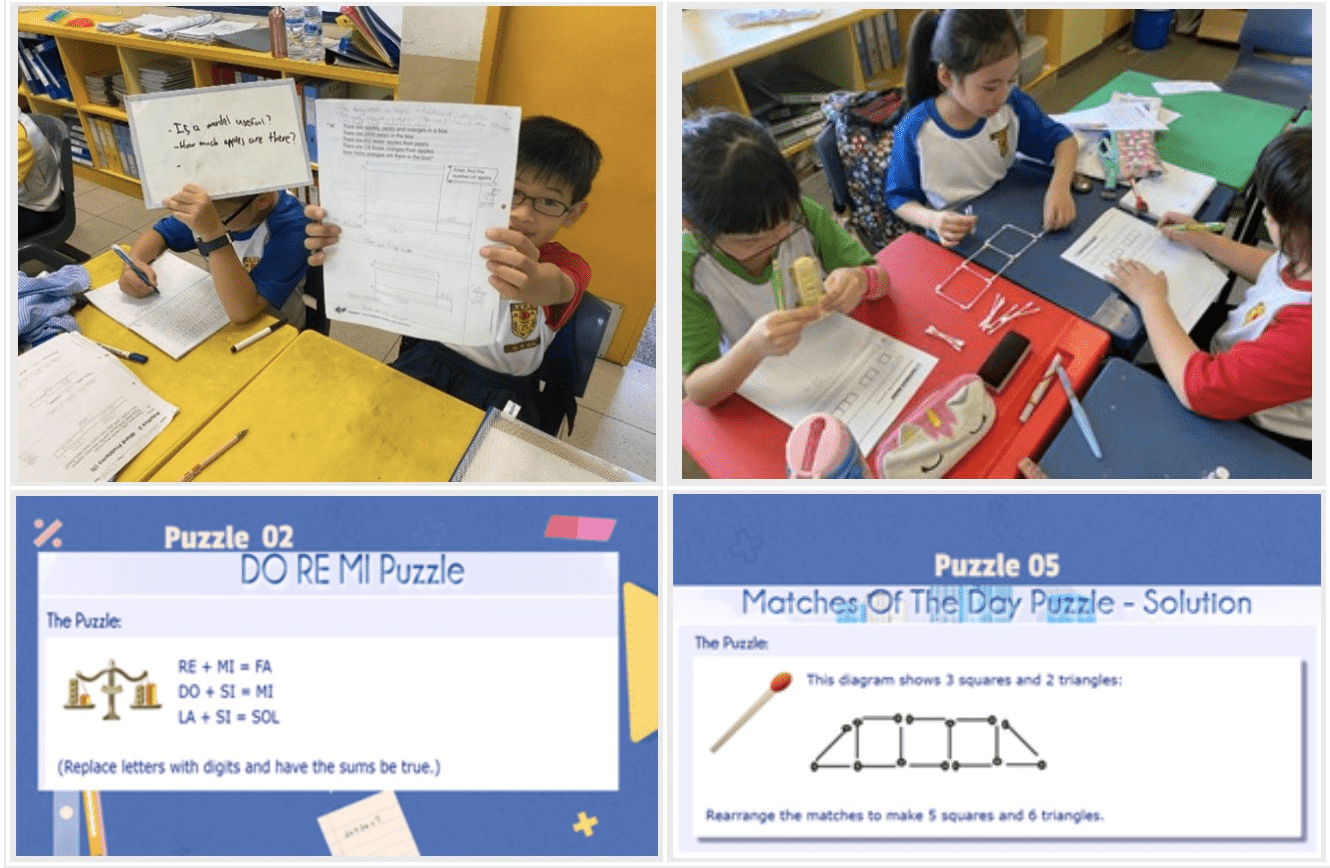
To engage our students more and to instill greater joy of learning, math department teachers plan lessons that enable students to have inquiry-based and activity-based learning. Students participate in different activities that require them to investigate, make conclusion, use manipulatives to find answers, create artfacts and make presentation. There are also assignments that range from hands-on activities to interactive games and virtual manipulatives. Teachers also introduce online quizzes, brain teasers and fun puzzles for students to reinforce their learning. All these aim to help students to find the learning of Mathematics more relevant, engaging and enjoyable. The programme has been well-received by both teachers and students.
(vi) Math Week
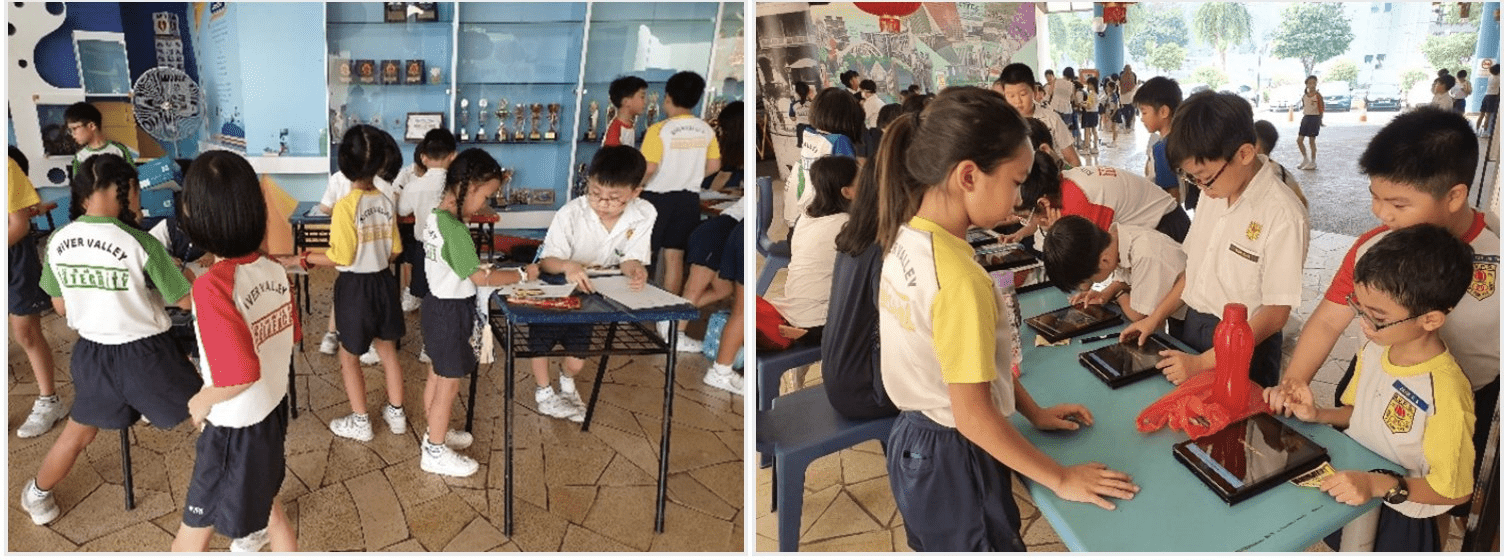
This will be a yearly event that kicked off in 2019. Students of all levels participate in activities specially designed for their respective levels by the math department. These activities range from classroom activities to recess booths. They are given many opportunities to try out some hands-on activities and online games to integrate what they have learnt in their lessons to real life experiences. Math representatives are given opportunity to show their leadership skills as they take charge of the execution of the games during recess and assist teachers with the resources and showcasing of students’ work in class.
MATH CURRICULUM CUSTOMISATION
--
Assessment is an integral part of the teaching and learning process. A balanced assessment system includes both summative and formative assessments which are valid and reliable. In RV, we use assessments not only to have feedback on our students’ learning but also to monitor their learning so that timely intervention can be carried out. We also use Formative assessments to provide information on how well students are progressing toward the desired learning goal(s). and informs students of their specific areas of strengths and weaknesses. A variety of modes of assessment, eg. performance tasks, diagnostic test, bite-sized tests, etc, are used in RV to enable teachers to have better feedback on their students’ learning and to implement follow-up actions to close gaps.
1) Performance tasks
The performance tasks assess students’ understanding and application of mathematical concepts in a non-threatening environment. Students either work individually, in pairs or groups to perform the tasks. Marks and rubrics are used to assess students’ performance in the task.
2) Bite-sized Assessments
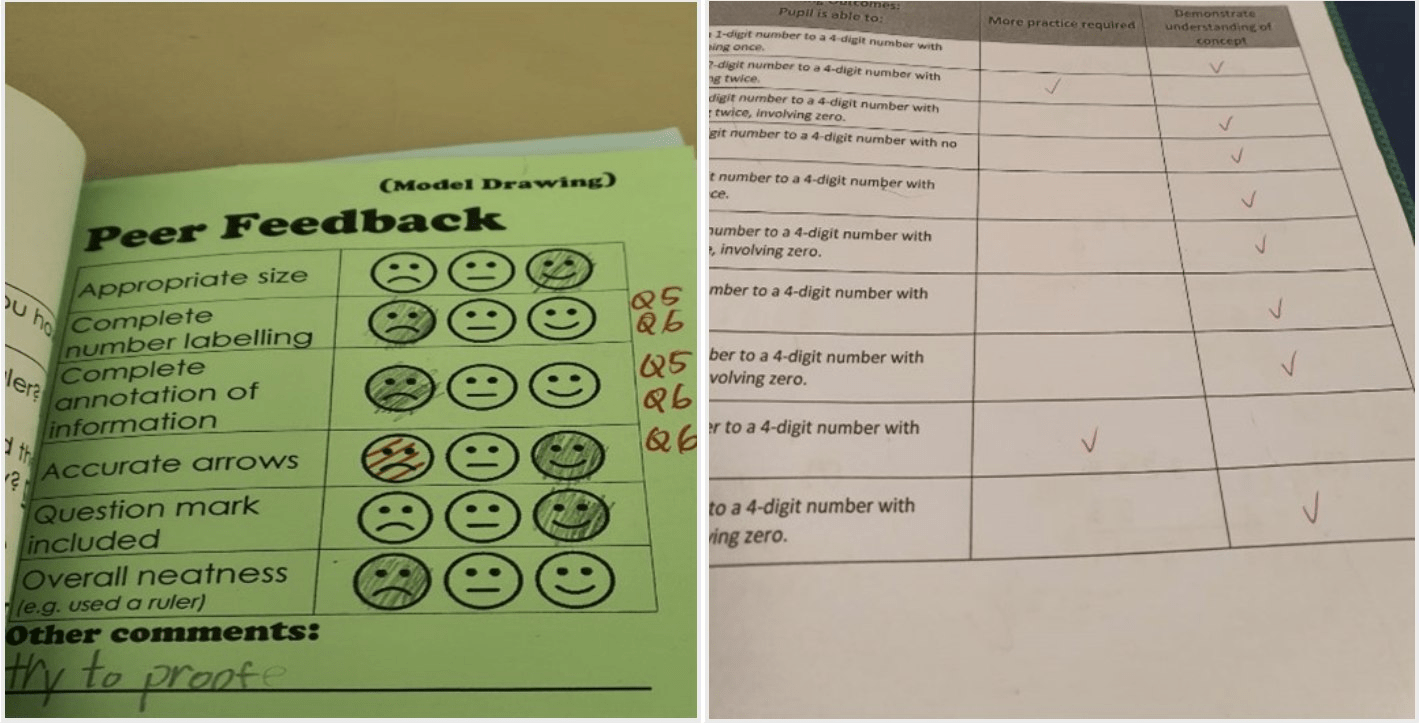
This comes in the form of Topical test and Mini Test to test mastery and application of skills and concepts. Qualitative feedback is also given to the students and parents to highlight areas where students have done well, and also ways to improve students’ learning. A Math checklist (selected topics) from P1 to P5 is used by teachers to evaluate learning and then to narrow gaps after assessing the students. Students and their parents are given feedback about their progress.
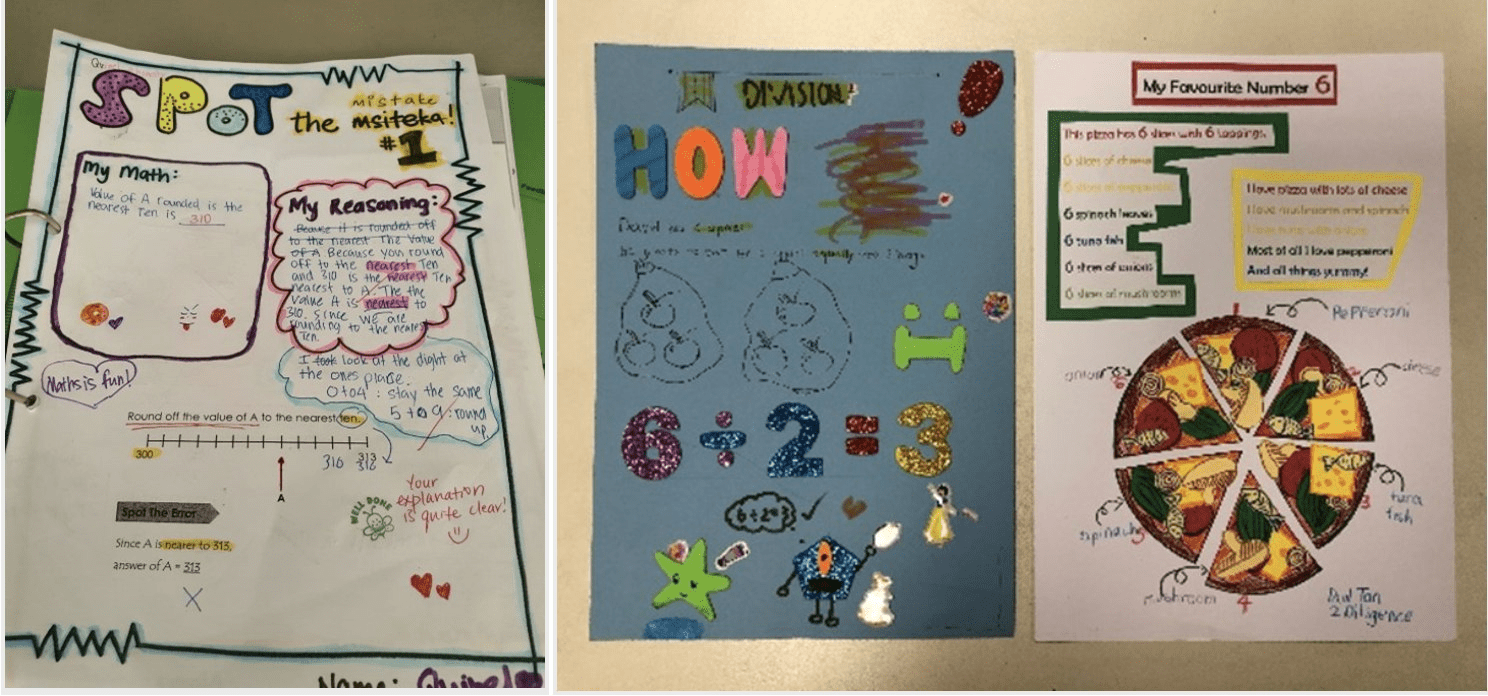
3) Journal Writing
It reinforces the learning and provides students with opportunities to engage in reflection, question their own understanding, connect the abstract and the concrete, and apply the knowledge they have acquired to solve problems. Teachers make use of questions to enhance students’ ability to justify their solutions.